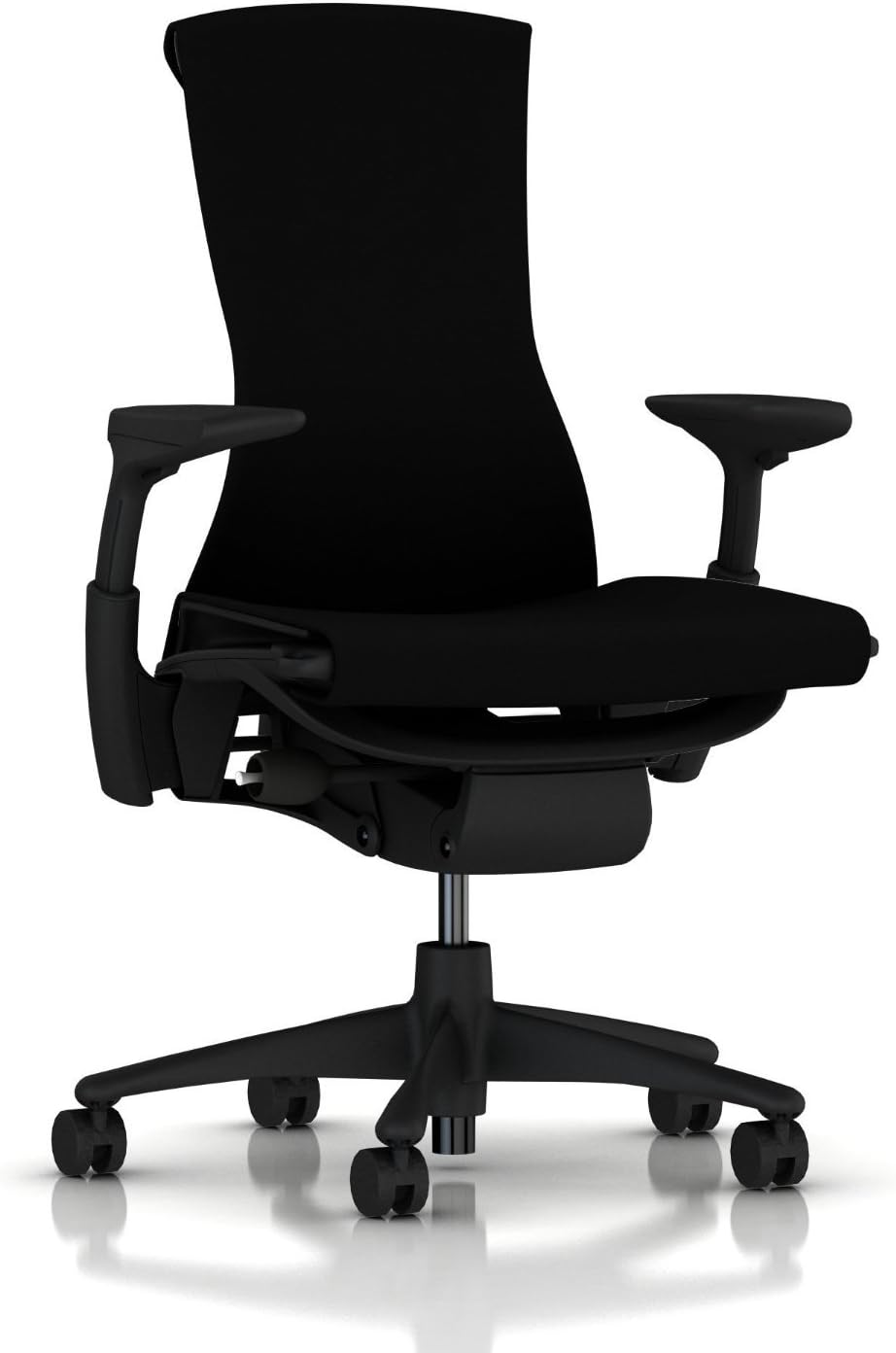



Herman Miller Embody Ergonomic Office Chair | Fully Adjustable Arms and Carpet Casters | Black Rhythm
This is an affiliate link. Buyyyah may earn a commission if you buy through it, at no extra cost to you.
Description
• RHYTHM fabric is tight, smooth soft to the touch, and prevents heat buildup • INNOVATIVE ERGONOMIC DESIGN - More than 20 physicians and PhDs in the fields of biomechanics, vision, physical therapy, and ergonomics contributed their expertise to help guide the development of this chair. As a result, Embody has set a new benchmark for pressure distribution, natural alignment, and support for healthy movement in ergonomic seating. • BACKFIT ADJUSTMENT - Embody’s back is designed like a human’s, with a central spine and flexible ribs. The Backfit adjustment allows you to position the backrest in line with your spine’s natural curve, so you achieve a neutral, balanced posture. Once the chair is tuned to fit you, the backrest adapts to your movement, adjusting automatically to your shifting positions. Whether you lean forward or recline, support remains constant. • FEATURES: tilt limiter, adjustable Seat Depth, fully adjustable arms, graphite base and frame, Black arm pads, and carpet casters • PIXELATED SUPPORT - You feel Embody’s Pixelated Support the moment you sit down—a sense that you are floating, yet perfectly balanced. Thanks to a dynamic matrix of pixels, Embody’s seat and back surfaces automatically conform to your body’s micro-movements, distributing your weight evenly as you sit. This reduces pressure and encourages movement, both of which are key to maintaining healthy circulation and focus. • LAYERS OF INTELLIGENCE - The Embody seat is comprised of four different support layers—each with its own set of material properties, and each created with a different manufacturing process, all working together, orienting themselves to your shape with a degree of fidelity so high they even accommodate pockets. These layers were designed for airflow, keeping you cool and comfortable as you sit. • FUNCTIONAL TECHNOLOGY - Form doesn’t just follow function with Embody. Function is on full display. Every part of the chair was designed to serve a very specific, healthful purpose. Embody’s technology isn’t hidden, but is instead part of its aesthetic.
Details
General
- Brand Name
- Herman Miller
- Model Name
- Embody
- Model Number
- CN122AWAAG1G1BB3014
- Manufacturer Part Number
- CN122AWAAG1G1BB3014
- Item Type Name
- Chair
- Unit Count
- 1 Count
- Recommended Uses For Product
- Office
- Room Type
- Office
- Age Range Description
- Adult
- Indoor Outdoor Usage
- Indoor
- Surface Recommendation
- Carpet
- Included Components
- Chair
- Style Name
- Modern
- Color
- Black Rhythm
- Pattern
- Solid
- Shape
- Rectangular
- Back Style
- Solid Back
- Arm Style
- with-arms
- Leg Style
- Tapered Leg
- Form Factor
- Upholstered
Dimensions
- Item Dimensions D x W x H
- 24"D x 26"W x 35"H
- Size
- 28D x 27W x 38.25H in
- Item Weight
- 51 Pounds
- Seat Height
- 20.5 Inches
- Seat Depth
- 22 inches
- Item Dimensions
- 28 x 27 x 38.25 inches
- Item Depth
- 29 inches
Materials & Care
- Material Type
- Aluminum, Graphite, Polyester
- Frame Material Type
- Alloy Steel
- Seat Material
- Textile
- Fill Material
- Foam
- Fabric Type
- Fabric
- Product Care Instructions
- Spot Clean
Features & Specs
- Additional Features
- Adjustable
- Furniture Base Movement
- Swivel
- Reclining Position Count
- 3
- Tilting
- Yes
- Number of Cup Holders
- 1
- Maximum Weight Recommendation
- 300 Pounds
- Required Assembly
- No
Warranty
- Manufacturer Warranty Description
- Herman miller's 12-year warranty covers everything that makes up their standard office furniture products—including electrical components, casters, pneumatic cylinders, tilts, and all moving mechanisms.
Frequently asked questions
- What is the maximum weight capacity of the Herman Miller Embody chair?
- The maximum weight recommendation is 300 pounds.
- Does the chair require assembly?
- No, required assembly is listed as 'No'.
- What warranty coverage comes with this chair?
- Herman Miller's 12-year warranty covers everything that makes up their standard office furniture products, including electrical components, casters, pneumatic cylinders, tilts, and all moving mechanisms.
Customer reviews

Embody, Leap, Gesture Review
I purchased this chair with every intent to return it, because I was positive that you could find a better (or equally as comfortable chair) for less money after reading all of the reviews about it. After a lot of hands-on experience with a few chairs, I decided to keep the Embody. For three years, I've used a Herman Miller Aeron. It's very comfortable, but it's what I call a "task chair", and is better suited for the office and less so for gaming or reclining back and watching movies on your computer. When I decided it was time for something more plush and comfortable, I tried out a few chairs: 1. Steelcase Leap v2 2. Steelcase Gesture 3. Herman Miller Embody Here is the short version of the review: - Skip the Gesture all together. The more adjustable armwrests do not make up for the fact that the back and lumbar support is not as good as the other two chairs. In every test besides the armrests, I could not justify getting this chair over the Leap. If this chair were cheaper, I could recommend it over the Leap, but as it stands, you are getting a much better bang for your buck by getting a Leap, or making the jump to an Embody. - Get the Steelcase Leap if you are on a budget, but do not pay more than $500 for the chair. (Madison Seating has some great deals on them refurbished) Past that, you might as well make the jump up to the Embody. The Leap is a very comfortable chair, and probably the one I would recommend to most people who are just dipping their toes into ergonomics on a budget. The cushion on this chair is deceiving, however, because if you have them side by side and you do a quick sit test, you will probably think that the Leap is more comfortable than the Embody due to the more plush seat and back (in comparison to the Embody). When I got the Leap, I immediately thought I would have to send back the Embody when I first sat in it. However, after about an hour, I started to feel pressure and discomfort in my back that I did not feel while using the Embody. After several hours, I realized that I sorely missed my Embody and it's form-fitting structure. Also, be aware that the Leap is a much warmer chair than the Embody. I never get hot in my chairs, but I felt quite warm after sitting in it for a full day. When I sat back in the Embody, it was like a cooling relief. However, I still think the Leap v2 is an excellent chair for under $500, and should be your next step up from a crappy traditional office chair. - Get the Embody if you want the most comfortable chair for the money, and ESPECIALLY if you spend all day sitting. This chair was the hands-down winner if you sit for hours, specifically once you get the chair dialed in to fit your body perfectly and learn to adjust it correctly depending on how you are sitting. It takes a few days of adjustments and trial to finally get that sweet spot, but once you do, it's amazing. The Embody was also the heavier and sturdier chair of the three, and I expect this chair will last a really long time. Bonus, the seat will never go flat. It's a much cooler (temperature) sitting chair than the others, and actually stays cool while you sit in it. The fabric is very comfortable, and while you have to treat it like fabric, it is a much higher-quality material than what is on the Gesture, and especially the Leap (the leap was soft but I don't think the material will wear well). While the Leap felt more plush in terms of cushion, I found this to be deceptive since the Embody proved to be much more comfortable. Overall, I was very impressed by the build quality of the Embody, it was far superior to the other chairs.Even the casters were smoother on carpet. Yes, it's more expensive. But unless you are on a tight budget, this chair will serve you better in the long run than the other two chairs. ******************************************************* First off, you need to understand that chair comfort is a very subjective thing. At the end of the day, most of the reviews out there are literally comparing features and then telling you to go sit on them yourself, because what is comfortable to them might not be to you. Most of the reviews pointed me towards Steelcase, simply because of the adjustable arms. Let's just say that I'm glad I did my own research, because there are more important things than if you can swivel the armwrests backwards. *COMFORT* Hands down, the Embody was the most comfortable chair out of the three, especially when sitting for extended periods of time. You simply cannot sit in these chairs at a store for ten minutes and have that be a good judge of comfort. At first, I thought maybe the Steelcase Leap might be more comfortable than the Embody, but then an hour went by and my body told me that there was no contest, especially in the lower back area. However, the Leap is a very comfortable chair, and excellent for the price. Why is the Embody so comfortable? - The seat is kind of like a hammock, where you are being suspended by netting and supported by plastic coils (you can't feel them), as opposed to sitting on a solid foam object (like the other chairs). It's more complicated than that, but the idea is the same. Basically, your butt doesn't get as fatigued because you aren't flattening it against a solid block of foam. I see this kind of seat lasting for a really, really, long time when compared to a traditional foam seat. - The back is the most comfortable I've felt on a chair. It hugs and conforms to your back regardless of what position you are sitting in. You hardly even notice it, which is the best part. The back slider system on the Leap is a joke, and it's my major complaint with the chair. The Gesture was better, but I preferred the feeling of the Embody. Over time though, I found the Gesture to have less-than-ideal lumbar support, and found myself preferring the Leap over the Gesture for back support. The Embody has a knob that you can use to fill in your back, and after about a week of use I realized you should be adjusting the back for different sitting positions. When sitting straight up, I need to adjust the knob to fill in my upper back and provide some support there, rather than just pure lumbar support. When I recline back, I turn the knob the other way for more lumbar, and it's very comfortable. - Superior reclining ability. I found the recline adjustment on the Steelcase Leap to be really...annoying. The first THREE positions barely do anything, they're still sitting you straight up with just very slight steps in between. Then the last two are more reclined, but not as reclined as the Embody, or as comfortable. Also, I mention this somewhere else in the review, but the armrests do not move with the recline on the Leap, so when you are reclined back, you have to completely adjust the armrests for your new position. On the Embody, you really only ever have to set them once, since they move with the recline. - You can "float" in this chair. You can do it better in the Aeron, but due to the forward placement of the recline mechanism, you can find this wonderful half-reclining position where you feel like your body is being weightlessly suspended, or floating. The chair almost disappears, and your muscles relax. I can sit in this position for several hours, and get up without a single bit of pain or discomfort. It works best if you have a nice keyboard tray, and you can pull the tray into your lap and basically relax everything except your hands to type. - Adjustability, adjustability, adjustability! One of the BEST parts about this chair is how much you can adjust it, and you should be adjusting it often, based on how you are sitting. One of the mistakes I first made was thinking I could set it once and forget it forever, but that's not the case. I use a completely different set of adjustments when I am sitting straight up in the chair as opposed to when I am reclining back and watching a movie or playing a game. At first, I thought I needed MAXIMUM LUMBAR SUPPORT, but I quickly realized that I actually needed more upper back support! A few turns of the knob filled in my upper back, and I felt amazing after sitting all day. I have slightly hunched shoulders from years of bad sitting, and this chair actually forms perfectly to my upper back to support it. If some days I need a little more lumbar support, I just adjust the knob a bit. The Leap and Embody are both comfortable chairs. But for me, I find that the Embody has an edge due to being much more comfortable over long periods of time, and far superior build quality (it's also a lot more expensive). Also, YOU CAN SIT CROSS-LEGGED in the Embody, and it's very comfortable with the back supporting you in different strange positions. I do this a lot when I'm watching a movie or something, and it's awesome. Let me close this part by saying you NEED to spend a bit of time with the Embody to get used to it, and understand how the adjustments work to form to your body. It took me a week of sitting in the chair before I realized I needed to change the back support a bit when sitting straight up, rather than a "one setting fits all" kind of thing. If you buy this chair, spend a minimum of two weeks with it and mess around with it before making up your mind. *DESIGN AND CONSTRUCTION* This is a very modern-looking chair compared to the Leap, which some people don't like. Personally, I find it very attractive from the back, but strange looking from the front, almost disproportional when you see how big the seat is compared to the back. The Gesture is much more normal-looking, and the Leap looks like a regular old office chair. I found the overall quality of the Embody to be superior to the other chairs. It just felt and looked so much more sturdy, despite the large amount of thick plastic on the back of the chair. Let's get one thing out of the way: the armrests. If you've read ANY reviews of this chair, people bash on the armrests as being so terrible and wobbly. Honestly, I PREFER the Embody armrests over the other two chairs, hands down. They aren't nearly as wobbly as people say, and actually the Leap had much worse wobble. Yes, the Gesture has much nicer and more adjustable armrests, but I don't find them as comfortable as the ones on the Embody. Once you get the width adjusted, they are rock solid and don't move an inch. Also, they curve down a bit on the outside edges, which is insanely comfortable and follows the natural curve of your forearm. It's hard to explain, but I love the way my arms rest on them. Also, the armwrests move back with you when you recline, rather than staying fixed like on the Leap. I found this to be incredibly annoying, because it meant I had to adjust my armwrests constantly, where on the Embody I didn't need to. The Embody also has very intuitively-placed controls. I looked at the manual once, and then I didn't have to look at it again. The knobs and levers just make sense to me for some reason. The Leap has awful controls, and they're confusing. The Gesture is better, but I prefer the Embody again in this department. It's not like they were impossible to figure out, I just didn't need to think about it. I knew where to put my hand exactly to adjust the recline, back support, etc. It's a small thing, but you can tell they had somebody sit in the chair and figured out where they kept instinctively putting their hands to make adjustments, and designed the controls around that. In terms of weight, the Embody is the heaviest chair of the three. The base really has some weight to it, and the chair feels like it's made of premium materials. The Leap felt much, much cheaper and lighter, and the Gesture is slightly less heavy. Still, I felt like the Leap was made of cheaper stuff and didn't feel as sturdy, even though the entire back on the Embody is plastic. Some people mentioned the Embody being noisy due to the moving parts on the back, but my Embody was the quietest chair of the three. I much prefer the seat adjustment of the Embody, once I got used to it. The Leap was really annoying to adjust the seat, since there isn't a dedicated object to hold onto, and I really loved being able to simply grab the two small handles to adjust the seat on a whim. When I recline back, I like the seat a little longer. I feel like I have a lot more control over the exact length when I'm using my hands as opposed to my hips to try to push it out to the right length. *STUFF I DON'T LIKE* Let's face it, I've said mostly great things about this chair. There are some things that I don't love, but these are mostly nitpicks. - I have a love-hate relationship with the seat slider. I love the idea, and I love how easy it is to slide forward (you're essentially unrolling the fabric and extending the frame to make the seat deeper). I adjust it a lot, because I like the seat longer when I'm reclining back, and shorter when I'm sitting straight up. Sometimes, it can be a bit finnicky to lock in place, and it has a less solid feel than I would like. Still, I like it better than the Leap or Gesture seats. - No headrest option. I was quite bugged that a chair at this price point wouldn't have a headrest, but I suspect it wouldn't work well with the flexible back. It doesn't make or break the chair, in my opinion, but it certainly would be nice. *FINAL THOUGHTS* One of the reasons the Embody is so comfortable is because you barely notice that it's there while you work, but you need to spend some time adjusting the chair to the perfect fit for your body. It has some of the best back support I've ever felt in a chair, and I really dig the looks. I love the seat, because I don't have to worry about it going flat after a few years of use. The armrests aren't as bad as everyone says, and I even preferred them over the competition. The chair reclines wonderfully, and is highly adjustable. I expected to send this chair back, but instead the other two went back. Steelcase makes great chairs, and you can compare based on price, but not pure comfort. I would absolutely recommend the Leap to somebody that is on a budget, and I probably would have been happy if I had only ordered the Leap. However, I once I got the Embody next to it, I couldn't return it, even knowing how much more expensive it was over the Leap. The extra money was worth it, in my opinion. Pair this chair with a footrest and an ergonomic keyboard tray, and you'll realize that your office is the most comfortable place in the house.
I purchased this chair with every intent to return it, because I was positive that you could find a better (or equally as comfortable chair) for less money after reading all of the reviews about it. After a lot of hands-on experience with a few chairs, I decided to keep the Embody. For three years, I've used a Herman Miller Aeron. It's very comfortable, but it's what I call a "task chair", and is better suited for the office and less so for gaming or reclining back and watching movies on your computer. When I decided it was time for something more plush and comfortable, I tried out a few chairs: 1. Steelcase Leap v2 2. Steelcase Gesture 3. Herman Miller Embody Here is the short version of the review: - Skip the Gesture all together. The more adjustable armwrests do not make up for the fact that the back and lumbar support is not as good as the other two chairs. In every test besides the armrests, I could not justify getting this chair over the Leap. If this chair were cheaper, I could recommend it over the Leap, but as it stands, you are getting a much better bang for your buck by getting a Leap, or making the jump to an Embody. - Get the Steelcase Leap if you are on a budget, but do not pay more than $500 for the chair. (Madison Seating has some great deals on them refurbished) Past that, you might as well make the jump up to the Embody. The Leap is a very comfortable chair, and probably the one I would recommend to most people who are just dipping their toes into ergonomics on a budget. The cushion on this chair is deceiving, however, because if you have them side by side and you do a quick sit test, you will probably think that the Leap is more comfortable than the Embody due to the more plush seat and back (in comparison to the Embody). When I got the Leap, I immediately thought I would have to send back the Embody when I first sat in it. However, after about an hour, I started to feel pressure and discomfort in my back that I did not feel while using the Embody. After several hours, I realized that I sorely missed my Embody and it's form-fitting structure. Also, be aware that the Leap is a much warmer chair than the Embody. I never get hot in my chairs, but I felt quite warm after sitting in it for a full day. When I sat back in the Embody, it was like a cooling relief. However, I still think the Leap v2 is an excellent chair for under $500, and should be your next step up from a crappy traditional office chair. - Get the Embody if you want the most comfortable chair for the money, and ESPECIALLY if you spend all day sitting. This chair was the hands-down winner if you sit for hours, specifically once you get the chair dialed in to fit your body perfectly and learn to adjust it correctly depending on how you are sitting. It takes a few days of adjustments and trial to finally get that sweet spot, but once you do, it's amazing. The Embody was also the heavier and sturdier chair of the three, and I expect this chair will last a really long time. Bonus, the seat will never go flat. It's a much cooler (temperature) sitting chair than the others, and actually stays cool while you sit in it. The fabric is very comfortable, and while you have to treat it like fabric, it is a much higher-quality material than what is on the Gesture, and especially the Leap (the leap was soft but I don't think the material will wear well). While the Leap felt more plush in terms of cushion, I found this to be deceptive since the Embody proved to be much more comfortable. Overall, I was very impressed by the build quality of the Embody, it was far superior to the other chairs.Even the casters were smoother on carpet. Yes, it's more expensive. But unless you are on a tight budget, this chair will serve you better in the long run than the other two chairs. ******************************************************* First off, you need to understand that chair comfort is a very subjective thing. At the end of the day, most of the reviews out there are literally comparing features and then telling you to go sit on them yourself, because what is comfortable to them might not be to you. Most of the reviews pointed me towards Steelcase, simply because of the adjustable arms. Let's just say that I'm glad I did my own research, because there are more important things than if you can swivel the armwrests backwards. *COMFORT* Hands down, the Embody was the most comfortable chair out of the three, especially when sitting for extended periods of time. You simply cannot sit in these chairs at a store for ten minutes and have that be a good judge of comfort. At first, I thought maybe the Steelcase Leap might be more comfortable than the Embody, but then an hour went by and my body told me that there was no contest, especially in the lower back area. However, the Leap is a very comfortable chair, and excellent for the price. Why is the Embody so comfortable? - The seat is kind of like a hammock, where you are being suspended by netting and supported by plastic coils (you can't feel them), as opposed to sitting on a solid foam object (like the other chairs). It's more complicated than that, but the idea is the same. Basically, your butt doesn't get as fatigued because you aren't flattening it against a solid block of foam. I see this kind of seat lasting for a really, really, long time when compared to a traditional foam seat. - The back is the most comfortable I've felt on a chair. It hugs and conforms to your back regardless of what position you are sitting in. You hardly even notice it, which is the best part. The back slider system on the Leap is a joke, and it's my major complaint with the chair. The Gesture was better, but I preferred the feeling of the Embody. Over time though, I found the Gesture to have less-than-ideal lumbar support, and found myself preferring the Leap over the Gesture for back support. The Embody has a knob that you can use to fill in your back, and after about a week of use I realized you should be adjusting the back for different sitting positions. When sitting straight up, I need to adjust the knob to fill in my upper back and provide some support there, rather than just pure lumbar support. When I recline back, I turn the knob the other way for more lumbar, and it's very comfortable. - Superior reclining ability. I found the recline adjustment on the Steelcase Leap to be really...annoying. The first THREE positions barely do anything, they're still sitting you straight up with just very slight steps in between. Then the last two are more reclined, but not as reclined as the Embody, or as comfortable. Also, I mention this somewhere else in the review, but the armrests do not move with the recline on the Leap, so when you are reclined back, you have to completely adjust the armrests for your new position. On the Embody, you really only ever have to set them once, since they move with the recline. - You can "float" in this chair. You can do it better in the Aeron, but due to the forward placement of the recline mechanism, you can find this wonderful half-reclining position where you feel like your body is being weightlessly suspended, or floating. The chair almost disappears, and your muscles relax. I can sit in this position for several hours, and get up without a single bit of pain or discomfort. It works best if you have a nice keyboard tray, and you can pull the tray into your lap and basically relax everything except your hands to type. - Adjustability, adjustability, adjustability! One of the BEST parts about this chair is how much you can adjust it, and you should be adjusting it often, based on how you are sitting. One of the mistakes I first made was thinking I could set it once and forget it forever, but that's not the case. I use a completely different set of adjustments when I am sitting straight up in the chair as opposed to when I am reclining back and watching a movie or playing a game. At first, I thought I needed MAXIMUM LUMBAR SUPPORT, but I quickly realized that I actually needed more upper back support! A few turns of the knob filled in my upper back, and I felt amazing after sitting all day. I have slightly hunched shoulders from years of bad sitting, and this chair actually forms perfectly to my upper back to support it. If some days I need a little more lumbar support, I just adjust the knob a bit. The Leap and Embody are both comfortable chairs. But for me, I find that the Embody has an edge due to being much more comfortable over long periods of time, and far superior build quality (it's also a lot more expensive). Also, YOU CAN SIT CROSS-LEGGED in the Embody, and it's very comfortable with the back supporting you in different strange positions. I do this a lot when I'm watching a movie or something, and it's awesome. Let me close this part by saying you NEED to spend a bit of time with the Embody to get used to it, and understand how the adjustments work to form to your body. It took me a week of sitting in the chair before I realized I needed to change the back support a bit when sitting straight up, rather than a "one setting fits all" kind of thing. If you buy this chair, spend a minimum of two weeks with it and mess around with it before making up your mind. *DESIGN AND CONSTRUCTION* This is a very modern-looking chair compared to the Leap, which some people don't like. Personally, I find it very attractive from the back, but strange looking from the front, almost disproportional when you see how big the seat is compared to the back. The Gesture is much more normal-looking, and the Leap looks like a regular old office chair. I found the overall quality of the Embody to be superior to the other chairs. It just felt and looked so much more sturdy, despite the large amount of thick plastic on the back of the chair. Let's get one thing out of the way: the armrests. If you've read ANY reviews of this chair, people bash on the armrests as being so terrible and wobbly. Honestly, I PREFER the Embody armrests over the other two chairs, hands down. They aren't nearly as wobbly as people say, and actually the Leap had much worse wobble. Yes, the Gesture has much nicer and more adjustable armrests, but I don't find them as comfortable as the ones on the Embody. Once you get the width adjusted, they are rock solid and don't move an inch. Also, they curve down a bit on the outside edges, which is insanely comfortable and follows the natural curve of your forearm. It's hard to explain, but I love the way my arms rest on them. Also, the armwrests move back with you when you recline, rather than staying fixed like on the Leap. I found this to be incredibly annoying, because it meant I had to adjust my armwrests constantly, where on the Embody I didn't need to. The Embody also has very intuitively-placed controls. I looked at the manual once, and then I didn't have to look at it again. The knobs and levers just make sense to me for some reason. The Leap has awful controls, and they're confusing. The Gesture is better, but I prefer the Embody again in this department. It's not like they were impossible to figure out, I just didn't need to think about it. I knew where to put my hand exactly to adjust the recline, back support, etc. It's a small thing, but you can tell they had somebody sit in the chair and figured out where they kept instinctively putting their hands to make adjustments, and designed the controls around that. In terms of weight, the Embody is the heaviest chair of the three. The base really has some weight to it, and the chair feels like it's made of premium materials. The Leap felt much, much cheaper and lighter, and the Gesture is slightly less heavy. Still, I felt like the Leap was made of cheaper stuff and didn't feel as sturdy, even though the entire back on the Embody is plastic. Some people mentioned the Embody being noisy due to the moving parts on the back, but my Embody was the quietest chair of the three. I much prefer the seat adjustment of the Embody, once I got used to it. The Leap was really annoying to adjust the seat, since there isn't a dedicated object to hold onto, and I really loved being able to simply grab the two small handles to adjust the seat on a whim. When I recline back, I like the seat a little longer. I feel like I have a lot more control over the exact length when I'm using my hands as opposed to my hips to try to push it out to the right length. *STUFF I DON'T LIKE* Let's face it, I've said mostly great things about this chair. There are some things that I don't love, but these are mostly nitpicks. - I have a love-hate relationship with the seat slider. I love the idea, and I love how easy it is to slide forward (you're essentially unrolling the fabric and extending the frame to make the seat deeper). I adjust it a lot, because I like the seat longer when I'm reclining back, and shorter when I'm sitting straight up. Sometimes, it can be a bit finnicky to lock in place, and it has a less solid feel than I would like. Still, I like it better than the Leap or Gesture seats. - No headrest option. I was quite bugged that a chair at this price point wouldn't have a headrest, but I suspect it wouldn't work well with the flexible back. It doesn't make or break the chair, in my opinion, but it certainly would be nice. *FINAL THOUGHTS* One of the reasons the Embody is so comfortable is because you barely notice that it's there while you work, but you need to spend some time adjusting the chair to the perfect fit for your body. It has some of the best back support I've ever felt in a chair, and I really dig the looks. I love the seat, because I don't have to worry about it going flat after a few years of use. The armrests aren't as bad as everyone says, and I even preferred them over the competition. The chair reclines wonderfully, and is highly adjustable. I expected to send this chair back, but instead the other two went back. Steelcase makes great chairs, and you can compare based on price, but not pure comfort. I would absolutely recommend the Leap to somebody that is on a budget, and I probably would have been happy if I had only ordered the Leap. However, I once I got the Embody next to it, I couldn't return it, even knowing how much more expensive it was over the Leap. The extra money was worth it, in my opinion. Pair this chair with a footrest and an ergonomic keyboard tray, and you'll realize that your office is the most comfortable place in the house.
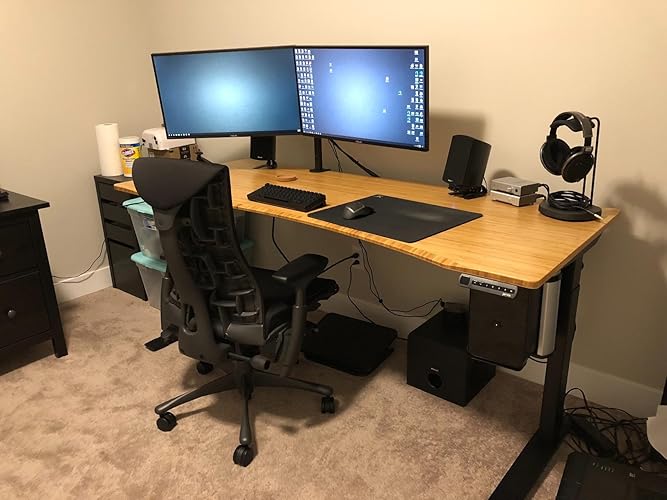

Unexpectedly great chair - easily adjusting it to suit changing day-to-day needs makes it incredible
The bottom line on this chair is that it is unexpectedly miraculous. After just 3 days, I've found it is unconventionally comfortable and the thing that makes it unique is that it renders adjusting it a normal part of its usage. I was originally like most folks, I presume - set the chair and then see how it does - but this chair demands that you use its intuitive controls to change things around as your needs change during the day. It is so easy to do, and that is where the magic is. I graduated from an excellent budget chair, the Alera Elusion high-back that is very adjustable. After over 5 years of pretty heavy usage, though, it was showing its wear, and I was really starting to feel the cushion every time I sat on it. I also started to experience some neck, shoulder, and lower back discomfort, and decided it was time to graduate to a better solution. I did not consider the Embody chair initially. At first glance, it looked a bit weird, and it was also on the expensive side, so I blew right past it. My initial starting point was the Aeron. I had used one at work years ago, and I recalled its adjustability. My body was much younger when I had used it, so I didn't experience its ergonomic benefits as well as I should have. I also looked at Steelcase models as they had some good reviews. Steelcase didn't fit my requirements as well as the Herman Miller solutions, so I gravitated strongly to the Aeron and was about to push the trigger on the order. A last second search on YouTube led me to the Embody and I was intrigued because of a couple of factors: the intuitiveness of the controls and the emphasis on the flexibility of the back and seat. The people that loved it REALLY loved it, and that, compounded with the Herman Miller return policy interested me enough to try it. So, here are some findings from the past 3 days: First, the seat is incredibly comfortable. The pixellated solution flexes with the weight that is applied to it, and it makes you feel as though you are suspended with no uncomfortable pressure points - this completely resolved the issue I was facing with the old Alera. It breathes well, is cool, and just invites you to sit down. The seat length adjustment required a little strength, but works well - you are not stuck with just the default length that might be either too small or too large. I had to adjust a couple of times to get just the right length. Once set, I don't foresee having to adjust it often. Second, I have found that I change the recline setting on the chair frequently. When I am typing, I set it so that it is relatively rigid, and when I am mostly reading, I set it so that it flexes more. There are several aspects to this - for typing, I set the tilt limiter to the position that allows the least possible movement or the next step down. I tighten the recline knob to keep me more upright, and adjust the back to a comfortable setting. It is all really easy, and the chair gives immediate feedback to ensure a good setting. When I am reading, I set the recline to setting 2 or 3 (more recline) and relax the recline a bit. That gives me the opportunity to lean back as needed and move around, with full support. If I am watching YouTube, I go to the most relaxed recline setting, and adjust the back to a less aggressive setting, and it is very comfortable. Setting/resetting all of the controls is responsive, easy, and intuitive. I never thought that this would be so required in a good seating experience. Third, I fiddled with the height of the chair to find the most comfortable setting. I use an iMovR standing desk and a Kinesis Advantage keyboard. I initially set the chair/desk combination so that my feet were flat on the ground and so that my forearms were angled downward slightly - supposedly more ergonomic. I ended up with some discomfort in my right wrist. Through experimentation, I found that raising my table or lowering the chair so that my forearms are angled a bit upwards got me in the correct wrist position for the keyboard, since it has wells. I am more upright with these settings, and am finding that my back is much more in contact with the chair, providing great and flexible support. This may not work well for folks using normal keyboards, but it is great with the Advantage. I also adjusted the height of the monitor so that it is a little higher than most ergonomic folks would recommend. I had found that by keeping the top of the monitor strictly at eye level as recommended, I was moving my head down to read the lower part of the screen, and this was causing some neck discomfort. My current setting is very comfortable. I have spent long hours in this chair over the past few days, and I am very impressed. My experience with the Alera and Aeron, both excellent chairs, is that they unwittingly promote the initial set and don't adjust paradigm, simply because adjustments, though technically possible, are not as integrated into the seating experience - you have to bend, get up, or twist unnaturally to do the adjustment. The Embody chair, on the other hand, encourages adjustments while you are in the seated position because the controls are few and easy to reach. This allows adjustments that correlate to the changing needs of our bodies throughout the day with immediate feedback because all of the controls are so well placed and simple to use. Flexibility and consistent support are inherently part of the design. No doubt that this chair is expensive, but with the generous 12 year warranty, this chair is about as good an investment you can make for your back and your general health if you spend significant time in a chair.
The bottom line on this chair is that it is unexpectedly miraculous. After just 3 days, I've found it is unconventionally comfortable and the thing that makes it unique is that it renders adjusting it a normal part of its usage. I was originally like most folks, I presume - set the chair and then see how it does - but this chair demands that you use its intuitive controls to change things around as your needs change during the day. It is so easy to do, and that is where the magic is. I graduated from an excellent budget chair, the Alera Elusion high-back that is very adjustable. After over 5 years of pretty heavy usage, though, it was showing its wear, and I was really starting to feel the cushion every time I sat on it. I also started to experience some neck, shoulder, and lower back discomfort, and decided it was time to graduate to a better solution. I did not consider the Embody chair initially. At first glance, it looked a bit weird, and it was also on the expensive side, so I blew right past it. My initial starting point was the Aeron. I had used one at work years ago, and I recalled its adjustability. My body was much younger when I had used it, so I didn't experience its ergonomic benefits as well as I should have. I also looked at Steelcase models as they had some good reviews. Steelcase didn't fit my requirements as well as the Herman Miller solutions, so I gravitated strongly to the Aeron and was about to push the trigger on the order. A last second search on YouTube led me to the Embody and I was intrigued because of a couple of factors: the intuitiveness of the controls and the emphasis on the flexibility of the back and seat. The people that loved it REALLY loved it, and that, compounded with the Herman Miller return policy interested me enough to try it. So, here are some findings from the past 3 days: First, the seat is incredibly comfortable. The pixellated solution flexes with the weight that is applied to it, and it makes you feel as though you are suspended with no uncomfortable pressure points - this completely resolved the issue I was facing with the old Alera. It breathes well, is cool, and just invites you to sit down. The seat length adjustment required a little strength, but works well - you are not stuck with just the default length that might be either too small or too large. I had to adjust a couple of times to get just the right length. Once set, I don't foresee having to adjust it often. Second, I have found that I change the recline setting on the chair frequently. When I am typing, I set it so that it is relatively rigid, and when I am mostly reading, I set it so that it flexes more. There are several aspects to this - for typing, I set the tilt limiter to the position that allows the least possible movement or the next step down. I tighten the recline knob to keep me more upright, and adjust the back to a comfortable setting. It is all really easy, and the chair gives immediate feedback to ensure a good setting. When I am reading, I set the recline to setting 2 or 3 (more recline) and relax the recline a bit. That gives me the opportunity to lean back as needed and move around, with full support. If I am watching YouTube, I go to the most relaxed recline setting, and adjust the back to a less aggressive setting, and it is very comfortable. Setting/resetting all of the controls is responsive, easy, and intuitive. I never thought that this would be so required in a good seating experience. Third, I fiddled with the height of the chair to find the most comfortable setting. I use an iMovR standing desk and a Kinesis Advantage keyboard. I initially set the chair/desk combination so that my feet were flat on the ground and so that my forearms were angled downward slightly - supposedly more ergonomic. I ended up with some discomfort in my right wrist. Through experimentation, I found that raising my table or lowering the chair so that my forearms are angled a bit upwards got me in the correct wrist position for the keyboard, since it has wells. I am more upright with these settings, and am finding that my back is much more in contact with the chair, providing great and flexible support. This may not work well for folks using normal keyboards, but it is great with the Advantage. I also adjusted the height of the monitor so that it is a little higher than most ergonomic folks would recommend. I had found that by keeping the top of the monitor strictly at eye level as recommended, I was moving my head down to read the lower part of the screen, and this was causing some neck discomfort. My current setting is very comfortable. I have spent long hours in this chair over the past few days, and I am very impressed. My experience with the Alera and Aeron, both excellent chairs, is that they unwittingly promote the initial set and don't adjust paradigm, simply because adjustments, though technically possible, are not as integrated into the seating experience - you have to bend, get up, or twist unnaturally to do the adjustment. The Embody chair, on the other hand, encourages adjustments while you are in the seated position because the controls are few and easy to reach. This allows adjustments that correlate to the changing needs of our bodies throughout the day with immediate feedback because all of the controls are so well placed and simple to use. Flexibility and consistent support are inherently part of the design. No doubt that this chair is expensive, but with the generous 12 year warranty, this chair is about as good an investment you can make for your back and your general health if you spend significant time in a chair.
The perfect office chair for me
I’ve always wanted a good ergonomic chair for my home office but, since most of my time was spend in the office prior to COVID, I couldn’t really justify spending the money. When COVID shutdown the office and remote work meant spending 10 – 12 hours in my cheapy chair, it was time to look for the home office chair of my dreams. I really had three chairs in mind; the Herman Miller (HM) Aeron, the HM Embody and the Steelcase (SC) Gesture. Why did I settle on the HM Embody? • Seating Material – In the office, the AC is always cranked up so you don’t really get hot even when sitting for long periods of time, so breathability of the seat doesn’t seem to be as much of a problem. Normally, at home you don’t have the AC up as high so there is a higher chance that your butt and back of your thighs will get hot and sweaty. The Gesture is a more traditional office seat design with tight woven fabric on a foam cushion seating surface. You could image it getting hot. The Embody has what I would call an airframe. The seating material is a sort of open weave, porous fabric (Balance fabric) and stretched over a frame. This allows air to circulate freely through the seat. Aeron is similar but a mesh. In this area Embody was chosen because, if you are wearing shorts (no one sees below our chest on a vid call. . . right?) the mesh could be rougher on your skin and not be as comfortable. This turned out to be true. The Embody fabric was much softer to the touch, yet just as breathable as the Aeron mesh. Durability of the fabric is very good and after almost 2 years of daily use there is no signs of wear or color fading. • Ergonomic adjustments – All three chairs have similar seat adjustments with one exception. The Aero and Gesture have adjustable lumbar supports. The Embody doesn’t. It has a sort of lattice structure that has curvatures to cradle your back. You can adjust the angle of the backrest to come in closer to your back, thus giving more lumbar support (and upper back support) or away for less. How this would actually feel was a big question at time of purchase, but I can tell you that it works fine for me and provide the support I need. I also like how the backrest tapers towards the middle. This allows more freedom of movement of your arms and elbows. • Arms - The arms should be part of the ergonomics, but although the Embody has less adjustments here it still provides good ergonomic support. The arms on the Embody move up and down and narrower to wider. They don’t slide fore/aft or pivot in/away from you. The limited arm adjustments have not been a problem. I can comfortably use the armrests all day. If you want more arm adjustability, the Gesture offers more, but from my use of the chair in the office, some of it like the pivot function, just get in the way. • Seat structure – All three have solid, durable structures. I have not had any problems with the base, casters, or seat frame itself. I expect it to last a long time. Now, everybody’s body is shaped differently and that matters when choosing a chair. To my knowledge the Embody and Gesture only come in one size while the Aeron is available in three. I am assuming that the Embody is designed to fit people within a certain average height and weight range. If you fall outside of that, the comfort and fit won’t be as good. In that case, you might want to look at the Aeron which offers different height adjustment ranges, seat widths, etc. You might also be a borderline so consider this example, I’m on the shorter side and with the Embody at its lowest position, I am just barely at the correct knee position. It works for me, but I have no margin. However, if I have chosen the Aeron size A, I would have additional space to lower the seat, but would also have to consider the narrower seat body. To sum it up. The Herman Miller Embody was well worth the price paid. The seat is very comfortable, breathes well, offers great support and is built to last. I would recommend this chair to anyone who is looking for a premium quality ergo chair, but as you can see, there are others that are just as good and may even fit your better. I hope I have been able to give you a good comparison that can show you the difference between a few of them so you can determine what is most important to you. However, no review can ever replace in seat (no pun intended) experience. If at all possible, find place where you can actually try them out. This is my 100%, guaranteed, best recommendation!
I’ve always wanted a good ergonomic chair for my home office but, since most of my time was spend in the office prior to COVID, I couldn’t really justify spending the money. When COVID shutdown the office and remote work meant spending 10 – 12 hours in my cheapy chair, it was time to look for the home office chair of my dreams. I really had three chairs in mind; the Herman Miller (HM) Aeron, the HM Embody and the Steelcase (SC) Gesture. Why did I settle on the HM Embody? • Seating Material – In the office, the AC is always cranked up so you don’t really get hot even when sitting for long periods of time, so breathability of the seat doesn’t seem to be as much of a problem. Normally, at home you don’t have the AC up as high so there is a higher chance that your butt and back of your thighs will get hot and sweaty. The Gesture is a more traditional office seat design with tight woven fabric on a foam cushion seating surface. You could image it getting hot. The Embody has what I would call an airframe. The seating material is a sort of open weave, porous fabric (Balance fabric) and stretched over a frame. This allows air to circulate freely through the seat. Aeron is similar but a mesh. In this area Embody was chosen because, if you are wearing shorts (no one sees below our chest on a vid call. . . right?) the mesh could be rougher on your skin and not be as comfortable. This turned out to be true. The Embody fabric was much softer to the touch, yet just as breathable as the Aeron mesh. Durability of the fabric is very good and after almost 2 years of daily use there is no signs of wear or color fading. • Ergonomic adjustments – All three chairs have similar seat adjustments with one exception. The Aero and Gesture have adjustable lumbar supports. The Embody doesn’t. It has a sort of lattice structure that has curvatures to cradle your back. You can adjust the angle of the backrest to come in closer to your back, thus giving more lumbar support (and upper back support) or away for less. How this would actually feel was a big question at time of purchase, but I can tell you that it works fine for me and provide the support I need. I also like how the backrest tapers towards the middle. This allows more freedom of movement of your arms and elbows. • Arms - The arms should be part of the ergonomics, but although the Embody has less adjustments here it still provides good ergonomic support. The arms on the Embody move up and down and narrower to wider. They don’t slide fore/aft or pivot in/away from you. The limited arm adjustments have not been a problem. I can comfortably use the armrests all day. If you want more arm adjustability, the Gesture offers more, but from my use of the chair in the office, some of it like the pivot function, just get in the way. • Seat structure – All three have solid, durable structures. I have not had any problems with the base, casters, or seat frame itself. I expect it to last a long time. Now, everybody’s body is shaped differently and that matters when choosing a chair. To my knowledge the Embody and Gesture only come in one size while the Aeron is available in three. I am assuming that the Embody is designed to fit people within a certain average height and weight range. If you fall outside of that, the comfort and fit won’t be as good. In that case, you might want to look at the Aeron which offers different height adjustment ranges, seat widths, etc. You might also be a borderline so consider this example, I’m on the shorter side and with the Embody at its lowest position, I am just barely at the correct knee position. It works for me, but I have no margin. However, if I have chosen the Aeron size A, I would have additional space to lower the seat, but would also have to consider the narrower seat body. To sum it up. The Herman Miller Embody was well worth the price paid. The seat is very comfortable, breathes well, offers great support and is built to last. I would recommend this chair to anyone who is looking for a premium quality ergo chair, but as you can see, there are others that are just as good and may even fit your better. I hope I have been able to give you a good comparison that can show you the difference between a few of them so you can determine what is most important to you. However, no review can ever replace in seat (no pun intended) experience. If at all possible, find place where you can actually try them out. This is my 100%, guaranteed, best recommendation!
PURE JOY? Words can't actually express it!
PURE JOY? Words can't actually express it… …so why try. Just say that after a quick and painless assembly of the back onto the chair base, and within mere minutes of sitting in the chair, I knew why it was worth the price in terms of both quality and comfort. I instantly knew it would benefit so many others with a range of different shapes, sizes, and complaints about sitting (especially long periods.) 5 minutes of sitting in the chair and my neck felt different, better... 10 minutes that and my back -- the actual SPINE -- felt no other way than I can describe but "better" because there was no weight on it, no pressure I didn't even realize was there previously in other chairs, and yet it was fully supported. Moving in the chair is also a pleasure -- I can reach back behind me a bit for a tissue on a shelf and the chair curves with my back! in fact, just about any way I move my back at all, the chair moves with it like fluid, providing support and comfort, and without getting in the way! You can spend some time with all the various adjustments (all very simple to operate and understand, but there is an AMAZING amount of flexibility in the configuration for this thing..) So many adjustments! Even for my mom who prefers chairs that tilt forward -- there is an adjustment for that. Curved back or straight? Adjustment for that. Elbow height? Adjustment for that. Long thighs? Adjustment for that!! (yes, the seat fabric can take the good range of movement for this adjustment!) You'll also note quality construction in the frame and casters, and arm rests and how they are attached to the base, and in the tension (also adjustable in several places) in chair movement. Those who need to put weight on their chair arms to sit or get up can easily slide the arm rests down -- and actually USE them to support themselves getting in and out of the chair due to the quality materials/construction. Within 1-1.5 hours of sitting in the chair after making the many various appropriate adjustments and understanding them, I ordered 2 more of these chairs! I needed one for my lady (so she will spend more time in the office with me!) and one for my mom, who really needs this chair for her back, posture, and ultimate comfort. I imagine she will cart it back and forth between her computer desk, kitchen table, and living room replacing the couch/chairs!!! BUY IT!!! For me personally, I did have issues with my back and I found myself recently constantly adjusting my lower back and how I sit. I have a curved back and slouch, rarely sitting with my butt in the back of the chair (towards the rear of the seat, where it generally should be!) but usually in the middle (even to front at times, towards the forward edge of the seat!) I also have shoulder/neck issues from elbow height and it seems no matter what chair/desk I purchase there is never a chair that is comfortable at the same height it takes to get my large thighs under the edge of the desk, in order to get my hands close to a keyboard without slouching forward. All of these issues were wreaking havoc on me in multiple ways, and ultimately I lost productivity and creativity, working less and less. Also I was tired - ALWAYS falling asleep in my chair. Not great when as a small business owner and software developer, I spend sometimes 20 hours in it at a time, and typically spend some number of hours in it 7 days a week. Would I buy another? In a heartbeat! As mentioned, I already bought two more for the important ladies in my life. Next, I will be buying them as bonuses for my employees, it will definitely help their productivity and it is also a tax deductible expense in that regard! 12 year warranty? I can see that not being needed with this quality, but it's good to know. Now, as the title says, words can't express it - JOY! Easiest thing to say is that all the problems in the previous paragraph? FIXED! (and then some) I could write more - this chair will ensure it, but my time is expensive so I gotta move on. JUST BUY IT!
PURE JOY? Words can't actually express it… …so why try. Just say that after a quick and painless assembly of the back onto the chair base, and within mere minutes of sitting in the chair, I knew why it was worth the price in terms of both quality and comfort. I instantly knew it would benefit so many others with a range of different shapes, sizes, and complaints about sitting (especially long periods.) 5 minutes of sitting in the chair and my neck felt different, better... 10 minutes that and my back -- the actual SPINE -- felt no other way than I can describe but "better" because there was no weight on it, no pressure I didn't even realize was there previously in other chairs, and yet it was fully supported. Moving in the chair is also a pleasure -- I can reach back behind me a bit for a tissue on a shelf and the chair curves with my back! in fact, just about any way I move my back at all, the chair moves with it like fluid, providing support and comfort, and without getting in the way! You can spend some time with all the various adjustments (all very simple to operate and understand, but there is an AMAZING amount of flexibility in the configuration for this thing..) So many adjustments! Even for my mom who prefers chairs that tilt forward -- there is an adjustment for that. Curved back or straight? Adjustment for that. Elbow height? Adjustment for that. Long thighs? Adjustment for that!! (yes, the seat fabric can take the good range of movement for this adjustment!) You'll also note quality construction in the frame and casters, and arm rests and how they are attached to the base, and in the tension (also adjustable in several places) in chair movement. Those who need to put weight on their chair arms to sit or get up can easily slide the arm rests down -- and actually USE them to support themselves getting in and out of the chair due to the quality materials/construction. Within 1-1.5 hours of sitting in the chair after making the many various appropriate adjustments and understanding them, I ordered 2 more of these chairs! I needed one for my lady (so she will spend more time in the office with me!) and one for my mom, who really needs this chair for her back, posture, and ultimate comfort. I imagine she will cart it back and forth between her computer desk, kitchen table, and living room replacing the couch/chairs!!! BUY IT!!! For me personally, I did have issues with my back and I found myself recently constantly adjusting my lower back and how I sit. I have a curved back and slouch, rarely sitting with my butt in the back of the chair (towards the rear of the seat, where it generally should be!) but usually in the middle (even to front at times, towards the forward edge of the seat!) I also have shoulder/neck issues from elbow height and it seems no matter what chair/desk I purchase there is never a chair that is comfortable at the same height it takes to get my large thighs under the edge of the desk, in order to get my hands close to a keyboard without slouching forward. All of these issues were wreaking havoc on me in multiple ways, and ultimately I lost productivity and creativity, working less and less. Also I was tired - ALWAYS falling asleep in my chair. Not great when as a small business owner and software developer, I spend sometimes 20 hours in it at a time, and typically spend some number of hours in it 7 days a week. Would I buy another? In a heartbeat! As mentioned, I already bought two more for the important ladies in my life. Next, I will be buying them as bonuses for my employees, it will definitely help their productivity and it is also a tax deductible expense in that regard! 12 year warranty? I can see that not being needed with this quality, but it's good to know. Now, as the title says, words can't express it - JOY! Easiest thing to say is that all the problems in the previous paragraph? FIXED! (and then some) I could write more - this chair will ensure it, but my time is expensive so I gotta move on. JUST BUY IT!


